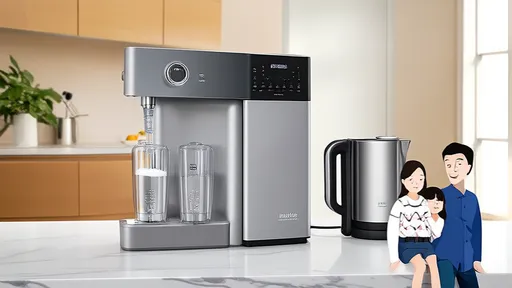
In the quest for healthier living, many households have turned to water purification systems as a fundamental appliance. Yet, a common oversight persists—selecting a unit based solely on filtration technology or brand reputation while neglecting one of the most practical considerations: matching the system’s water output capacity to the number of people in the home. This alignment is not merely about convenience; it directly impacts daily efficiency, cost-effectiveness, and the long-term value of the investment.
Water purifiers are designed with varying output rates, typically measured in gallons per day (GPD) or liters per hour. A compact under-sink model might produce enough for one or two individuals, whereas a whole-house system is built to support larger families. Understanding your household’s water consumption patterns is the first step toward making an informed choice. For instance, a couple living alone may use water primarily for drinking and cooking, totaling perhaps 2-3 gallons a day. In contrast, a family of five likely requires water for drinking, meal preparation, beverages, and possibly even for pets, easily doubling or tripling that amount.
The consequences of a mismatch can be frustrating. An undersized purifier will struggle to keep up with demand, especially during peak usage times like mornings or evenings. You might find yourself waiting for the storage tank to refill or, worse, facing intermittent dry taps. This not only tests patience but also places undue strain on the system’s components, potentially shortening its lifespan. On the other hand, an oversized unit, while never leaving you thirsty, often comes with higher upfront costs, increased energy consumption, and more frequent filter replacements—expenses that could have been avoided with a right-sized choice.
So how does one determine the ideal output? A practical approach is to estimate daily water needs per person and multiply by the number of household members. Most experts recommend allocating between half a gallon and a gallon of drinking water per person per day, though this can vary based on lifestyle. Active individuals, families with young children, or those who frequently cook at home might lean toward the higher end. Don’t forget to account for guests; if you regularly host visitors, it’s wise to factor in some additional capacity.
When evaluating purifier specifications, pay close attention to the peak flow rate and the total daily output. The peak flow rate indicates how quickly water is delivered—critical for moments when multiple people need water simultaneously. The daily output, often listed as GPD, should comfortably exceed your calculated daily requirement to accommodate unexpected surges. Systems with storage tanks can help buffer demand, but tankless models, which purify on demand, rely entirely on their real-time output capacity.
Household composition also influences needs beyond mere numbers. For example, homes with infants might prioritize purifiers with specialized filters to ensure ultra-pure water for formula preparation. Larger families might benefit from point-of-entry systems that treat all water entering the home, though these require significantly higher output capacities. Meanwhile, smaller households or apartments might find under-sink or countertop models with moderate output both sufficient and space-efficient.
It’s also worth considering the type of filtration technology in relation to output. Reverse osmosis (RO) systems, known for their thorough purification, typically have slower output rates due to the intricate process. However, advancements like permeate pumps or faster membrane technologies have improved their efficiency. Alternatively, activated carbon filters often provide faster flow but might not remove certain contaminants. Balancing purification quality with speed is key; sometimes, a hybrid system or a dual-tank RO unit can offer the best of both worlds for a bustling household.
Beyond daily use, think about long-term maintenance and scalability. A family might grow, or water usage habits might change. Some purifiers allow for modular upgrades, such as adding auxiliary tanks or connecting to larger pre-filters, to enhance output without replacing the entire system. Investing in a slightly higher capacity model than currently needed can be a prudent decision, offering room for expansion while avoiding premature obsolescence.
In regions with variable water quality, the purifier’s output might be affected by the incoming water’s contamination level. Heavily polluted water can clog filters faster, reducing flow rate over time. In such cases, opting for a system with a higher initial output and robust pre-filtration stages can mitigate this issue, ensuring consistent performance throughout the filter’s lifespan.
Ultimately, selecting a water purifier is a blend of science and lifestyle assessment. While technical specs provide a framework, your household’s rhythms and routines should guide the final decision. Take time to observe your water usage over a few days—note when demand peaks, how much is used for different purposes, and any seasonal variations. This hands-on insight, combined with manufacturer guidelines, will lead you to a system that seamlessly integrates into your home.
Remember, a well-matched water purifier does more than just hydrate; it supports a smooth-running household, reduces wasteful spending, and delivers peace of mind. By prioritizing output capacity alongside filtration quality, you ensure that every drop produced meets your needs—no more, no less.
By /Aug 26, 2025

By /Aug 26, 2025
By /Aug 26, 2025
By /Aug 26, 2025

By /Aug 26, 2025

By /Aug 26, 2025

By /Aug 26, 2025

By /Aug 26, 2025

By /Aug 26, 2025
By /Aug 26, 2025

By /Aug 26, 2025

By /Aug 26, 2025

By /Aug 26, 2025

By /Aug 26, 2025

By /Aug 26, 2025

By /Aug 26, 2025

By /Aug 26, 2025
By /Aug 26, 2025
By /Aug 26, 2025

By /Aug 26, 2025