The world of flavor extraction has witnessed a paradigm shift with the advent of alcohol-free technologies, and at the forefront of this revolution stands the Spinning Cone Column (SCC). This sophisticated piece of engineering has redefined the boundaries of what is possible in capturing and preserving the delicate, volatile essence of natural products. Unlike traditional methods that often rely on solvents like ethanol or hexane, the SCC operates on a principle of gentle vacuum and low-temperature distillation, creating an environment where even the most fragile aromatic compounds can be coaxed from their source material without degradation. The significance of this technology extends far beyond a simple technical achievement; it represents a fundamental change in how the food, beverage, and fragrance industries approach the very soul of their products—their flavor.
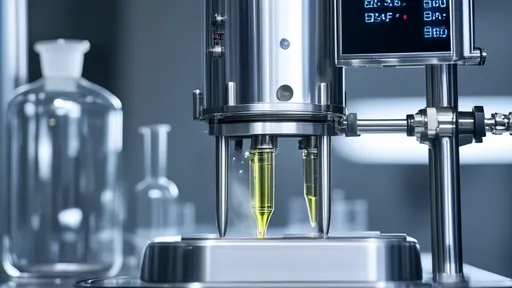
The core mechanism of the Spinning Cone Column is a marvel of precision engineering. Imagine a vertical column housing a series of rotating cones, alternating between fixed and spinning. The process begins as the liquid feedstock, perhaps a freshly pressed fruit juice or a herbal infusion, is introduced at the top of the column. As it trickles downwards, it meets a current of warm, inert gas or steam flowing upwards. The spinning cones serve a critical dual purpose: they create an extremely thin film of the liquid, maximizing its surface area, and they generate intense turbulence. This combination is the secret to its success. The vast surface area allows for the highly efficient and rapid transfer of volatile aromatic molecules from the liquid phase into the vapor phase. Crucially, because the entire process occurs under a controlled vacuum, the boiling points of these compounds are significantly lowered. This means extraction can happen at temperatures as low as 30-40°C (86-104°F), a far cry from the harsh heat of conventional steam distillation.
This gentle thermal environment is the single most important factor in the SCC's unparalleled flavor retention capability. Heat is the enemy of flavor. Traditional high-temperature extraction methods, while effective at pulling out a broad spectrum of compounds, inevitably cause damage. They can catalyze oxidation reactions, break down delicate ester molecules responsible for fruity and floral notes, and create Maillard reaction products that impart cooked or off-notes, effectively altering the authentic profile of the raw material. The SCC's cold-processing nature avoids this entirely. It acts more like a skilled photographer capturing a perfect, fleeting moment in time rather than a painter who might reinterpret the scene. The resulting extract, often called a "live" or "true-to-nature" essence, is a near-perfect chromatographic fingerprint of the original product's volatile profile.
The selectivity of the Spinning Cone Column further enhances its fidelity. Operators have exquisite control over the process parameters—vacuum level, temperature, flow rates, and rotation speed. This allows for a level of precision unheard of in older technologies. It is possible to "tune" the column to target specific families of compounds. For instance, one can emphasize the recovery of top notes, those light, fresh, and immediately perceptive aromas that are often lost first, or focus on capturing the heavier base notes that provide depth and longevity. This capability makes the SCC not just an extraction tool but a refinement instrument, enabling the creation of bespoke flavor profiles tailored for specific applications without the need for extensive post-processing or reconstitution.
The output of the SCC process is a concentrated aqueous essence, completely free of alcoholic or chemical solvents. This has profound implications for product development and consumer appeal. In the beverage industry, particularly in the booming non-alcoholic and "proof-free" sectors, it allows for the creation of sophisticated, complex flavors without the regulatory, labeling, and ethical concerns associated with alcohol. A distilled non-alcoholic spirit can possess the intricate botanical bouquet of gin or the smoky complexity of whisky, derived entirely from the raw ingredients themselves. In food applications, these true-to-fruit concentrates can enhance yogurts, confectioneries, and desserts without introducing a "processed" flavor note, catering to the growing consumer demand for clean labels and natural ingredients.
When compared to other modern extraction techniques, the SCC's advantages in flavor preservation become even more apparent. Methods like supercritical CO2 extraction are excellent for non-polar compounds and creating potent oleoresins, but they can sometimes miss the most hydrophilic, delicate top notes. Cold pressing, while natural, lacks the concentrating power and can introduce enzymes that lead to spoilage. The SCC elegantly bridges this gap, offering both concentration and preservation. It is often used in tandem with other technologies; for example, an SCC might be used to first capture the entire volatile profile of a coffee, after which supercritical CO2 could be used to extract caffeine. The SCC extract is then added back to decaffeinated beans, restoring the original aroma that is typically devastated in conventional decaffeination processes.
In conclusion, the Spinning Cone Column is far more than just a piece of industrial equipment. It is a guardian of flavor integrity. Its unique combination of low-temperature vacuum distillation, immense surface area creation, and precise process control allows it to achieve what was once thought impossible: the near-perfect capture of nature's most fleeting aromas. As the global market continues to shift towards authenticity, naturality, and alcohol-free options, the role of this innovative technology will only become more central. It empowers creators to deliver an unparalleled sensory experience, bottling the very essence of a sun-ripened strawberry, the fresh zest of a lime, or the deep bouquet of roasted coffee, and delivering it to the consumer exactly as nature intended.
By /Aug 29, 2025
By /Aug 29, 2025

By /Aug 29, 2025

By /Aug 29, 2025
By /Aug 29, 2025

By /Aug 29, 2025
By /Aug 29, 2025
By /Aug 29, 2025

By /Aug 29, 2025

By /Aug 29, 2025

By /Aug 29, 2025
By /Aug 29, 2025
By /Aug 29, 2025
By /Aug 29, 2025
By /Aug 29, 2025
By /Aug 29, 2025

By /Aug 29, 2025

By /Aug 29, 2025
By /Aug 29, 2025

By /Aug 29, 2025