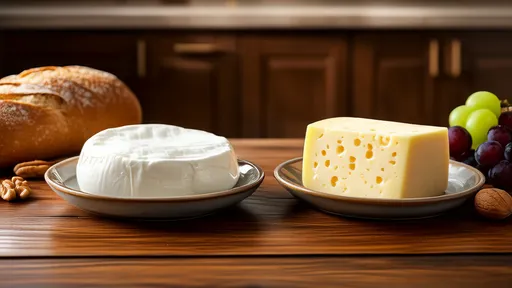
In the world of culinary arts, few ingredients offer as much versatility and subtle nuance as cheese. Among the vast array of options available to both home cooks and professional chefs, ricotta and cottage cheese often find themselves at the center of a fascinating, and sometimes confusing, substitution debate. These two fresh, milky cheeses share a similar appearance and a common production heritage rooted in whey, yet they possess distinct characteristics that can dramatically alter the outcome of a dish. Understanding when one can stand in for the other, and when such a swap is a culinary misstep, requires a deep dive into their textures, flavors, moisture content, and cultural roles in cooking.
The journey of both cheeses begins with a process that might otherwise be considered waste: whey. After the initial curds are formed to make other cheeses, the leftover liquid whey is reheated. The remaining proteins coagulate, forming the delicate, fine curds that become ricotta, whose name literally means "recooked" in Italian. Traditionally, ricotta is made from the whey of sheep, cow, goat, or water buffalo milk, giving it a subtly sweet and milky flavor profile. Its texture is notably creamy and slightly grainy, but it holds together well, making it ideal for applications where structure is key, such as stuffed pasta shells or layered in a classic Italian lasagna.
Cottage cheese, on the other hand, is typically made from the whole or skim milk itself, not just the whey. This results in a different curd structure—larger, looser, and more distinct. The curds are often bathed in a cream dressing, which can adjust the final fat content and richness. The flavor of cottage cheese is milder and tangier compared to ricotta, and its texture is markedly wetter and more lumpy. This makes it a fantastic, protein-rich option for breakfast bowls or salads, but its high moisture content and loose structure present a challenge in cooked applications where binding and a smooth consistency are desired.
When considering a substitution, the first and most critical factor is texture and moisture. For baked dishes like cheesecakes, cannoli fillings, or savory baked pasta where a smooth, firm, and creamy result is the goal, ricotta is almost always the superior choice. Its lower moisture content and finer curds allow it to blend seamlessly with other ingredients, creating a homogeneous mixture that sets beautifully when cooked. Attempting to use cottage cheese in such a recipe will likely lead to a watery, grainy, and potentially separated final product. The excess liquid will weep out during baking, creating a soggy bottom in a tart or a runny filling in your cannoli.
However, all is not lost for the cottage cheese enthusiast. In applications where the cheese will be blended or creamed, a substitution can not only work but sometimes even enhance the dish. For a high-protein, lower-fat alternative in dips, spreads, or even as a filling for stuffed pasta if handled correctly, cottage cheese can be transformed. The key is to drain it thoroughly—often using a cheesecloth or a fine-mesh strainer for at least 30 minutes—to remove as much whey as possible. After draining, pulsing it in a food processor can break down the large curds and mimic the smoother consistency of ricotta. In this form, it can work well in lasagna or stuffed shells, though the final flavor will be tangier and less rich.
The reverse substitution—using ricotta in place of cottage cheese—is less common but not unheard of. If a recipe, like a health-conscious salad or a breakfast plate, specifically calls for the distinct lumpy texture and tangy punch of cottage cheese, ricotta will fall short. Its smoother, sweeter profile will seem out of place. That said, for those who find the texture of cottage cheese unappealing, lightly mashed ricotta can provide a similar nutritional profile with a more palatable consistency. It will lack the tang, but it can be a suitable swap for those prioritizing texture over authentic flavor.
Beyond the technical aspects of cooking, the choice between ricotta and cottage cheese is often a matter of cultural authenticity and personal dietary goals. Ricotta is the heart and soul of countless Italian desserts and savory dishes. A classic Sicilian cannoli or a traditional Roman pasta alla Norma relies on the specific sweet creaminess of ricotta for its authentic character. Substituting cottage cheese, even if drained and blended, would create a completely different, and arguably inauthentic, experience. Conversely, cottage cheese has carved out its own identity in American, German, and Eastern European cuisines as a health food and a diet staple. Its high protein and lower calorie count make it a favorite for those watching their intake, and its unique texture is a feature, not a bug, in many classic recipes.
Ultimately, the ricotta versus cottage cheese dilemma does not have a single, definitive answer. It is a question of context. For the purist crafting an authentic Italian feast, there is no substitute for high-quality ricotta. Its role is irreplaceable. For the innovative home cook looking to add a protein boost to a weeknight lasagna or create a lighter version of a dip, a properly prepared cottage cheese can be a brilliant and successful stand-in. The most important tool in a cook's arsenal is not just the ingredients themselves, but the knowledge of how they behave. This experiment in substitution teaches a broader lesson in cooking: understanding the why behind an ingredient's function empowers you to make intelligent, creative, and delicious choices in the kitchen, whether you choose to follow the recipe to the letter or boldly forge your own path.

By /Aug 29, 2025

By /Aug 29, 2025

By /Aug 29, 2025

By /Aug 29, 2025

By /Aug 29, 2025

By /Aug 29, 2025

By /Aug 29, 2025

By /Aug 29, 2025

By /Aug 29, 2025

By /Aug 29, 2025

By /Aug 29, 2025

By /Aug 29, 2025
By /Aug 29, 2025
By /Aug 29, 2025
By /Aug 29, 2025
By /Aug 29, 2025

By /Aug 29, 2025

By /Aug 29, 2025

By /Aug 29, 2025

By /Aug 29, 2025